

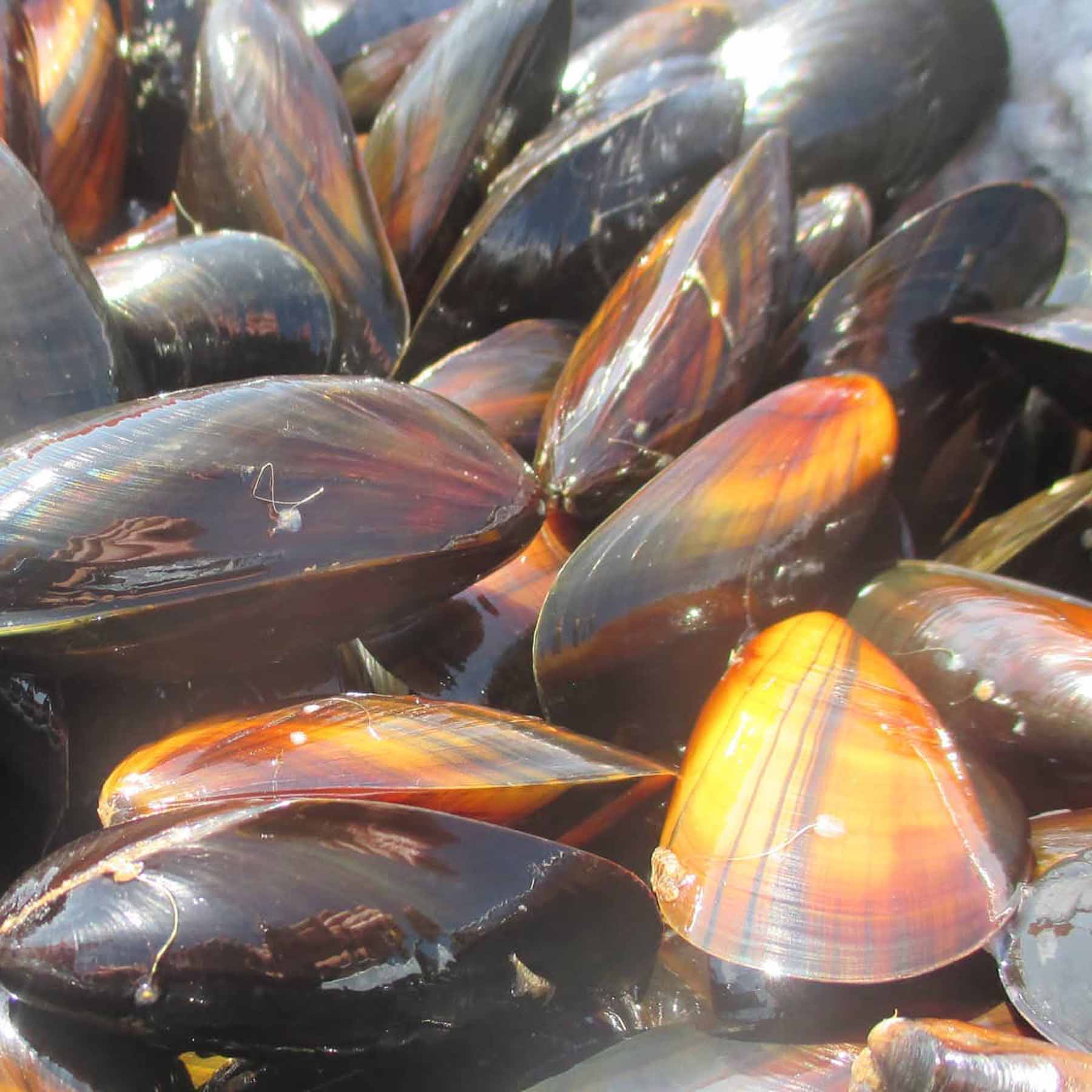
Offshore Shellfish combines engineered offshore aquaculture systems with the natural biology of blue mussels (Mytilus edulis) to produce nutritious protein with minimal environmental input.
Our farm uses rope-based longline technology, specifically adapted for high-energy offshore environments. Longline systems consist of buoyant backbone lines anchored to the seabed, from which hundreds of vertical droppers carry millions of juvenile mussels into the water column. This configuration maximises exposure to nutrient-rich flows, supporting efficient natural growth and high meat yields.
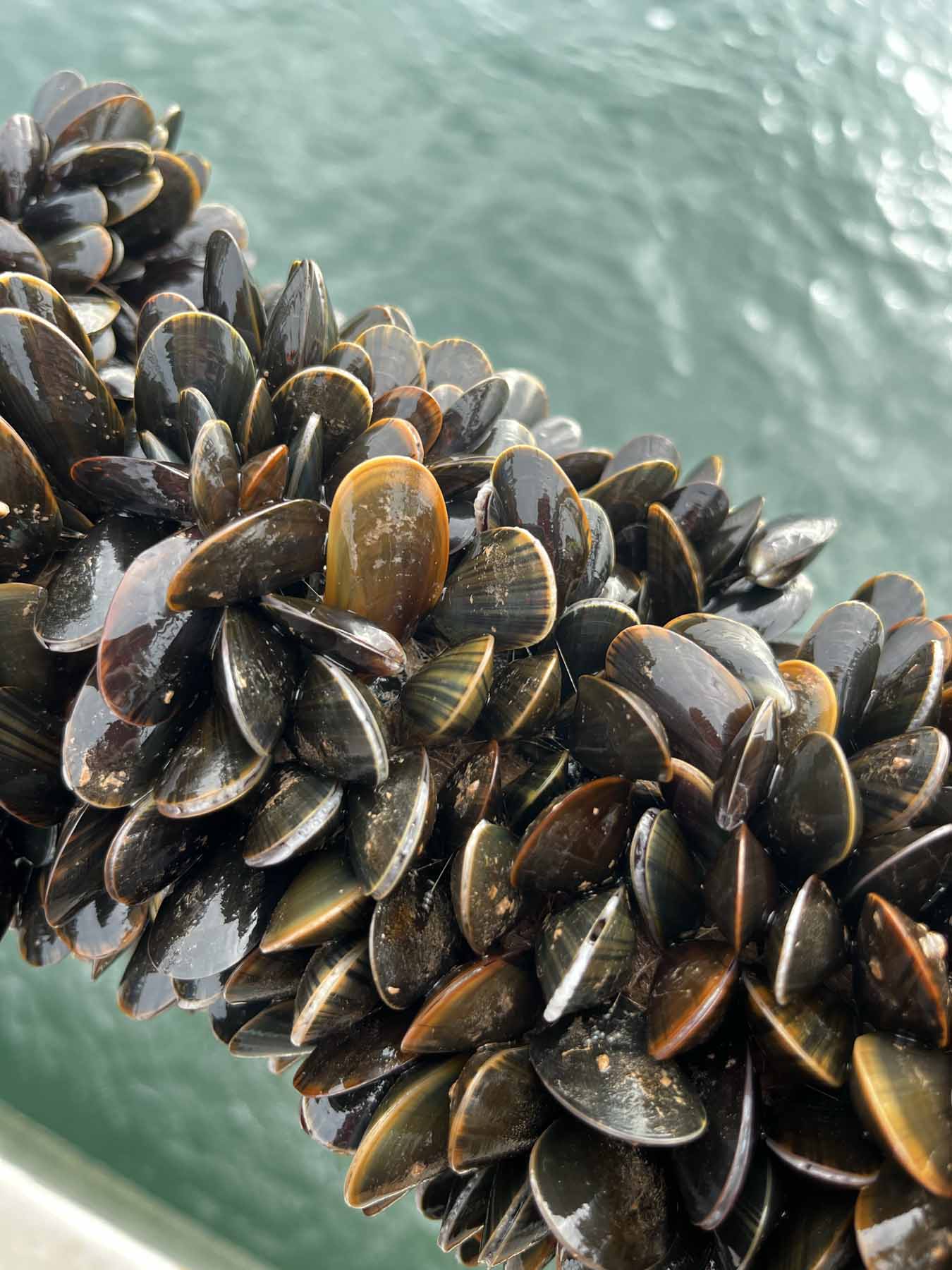
Operating 3–6 miles offshore in Lyme Bay presents unique challenges — strong tides, swells and wind forces require robust design and precise marine engineering. All structural components, moorings and ropes are selected and engineered to withstand these conditions, ensuring:
This technical foundation enables production at meaningful scale — up to 10,000 tonnes annually — while keeping operations efficient and robust against marine forces.
Our mussels settle naturally on suspended ropes, feeding exclusively on plankton drawn from surrounding waters. No external feed, fertiliser or freshwater inputs are required — making rope-cultured mussels one of the lowest-impact sources of animal protein available.
Mussels also capture carbon through biomineralisation, converting dissolved carbon and minerals into stable calcium carbonate shells. This contributes to low lifecycle emissions and strengthens the case for mussel farming as part of climate-aligned food systems.
Our partnership with the University of Plymouth underpins continuous ecological monitoring and long-term research. Since the farm’s establishment in 2013, multiple integrated studies have evaluated how offshore rope systems interact with the marine environment — from plankton dynamics to benthic and pelagic biodiversity.
The Ropes to Reefs Fisheries Industry Science Partnership (FISP) project extends this work, assessing whether offshore mussel infrastructure provides wider ecosystem benefits such as:
This research demonstrates how engineered mussel farms can function as biogenic reefs, contributing both to food production and to ecological restoration. Independent analyses also show increases in species such as bass and horse mackerel around offshore rope infrastructure.
Beyond production, Offshore Shellfish offers technical consulting services for organisations and investors exploring mussel farming and offshore aquaculture development. Our expertise includes:
We leverage our years of offshore experience and academic partnerships to guide practical, science-informed decisions at every stage — from feasibility studies to full-scale implementation.